
Ammonites, Ammolite and Colour From Deep Time
Iridescent ammonites make other fossils look underdressed. Not because they’re old, although they are unimaginably old. These fossils belonged to marine animals drifting through prehistoric oceans between 240 and 65 million years ago, long before humans, mammals or even flowering plants existed.
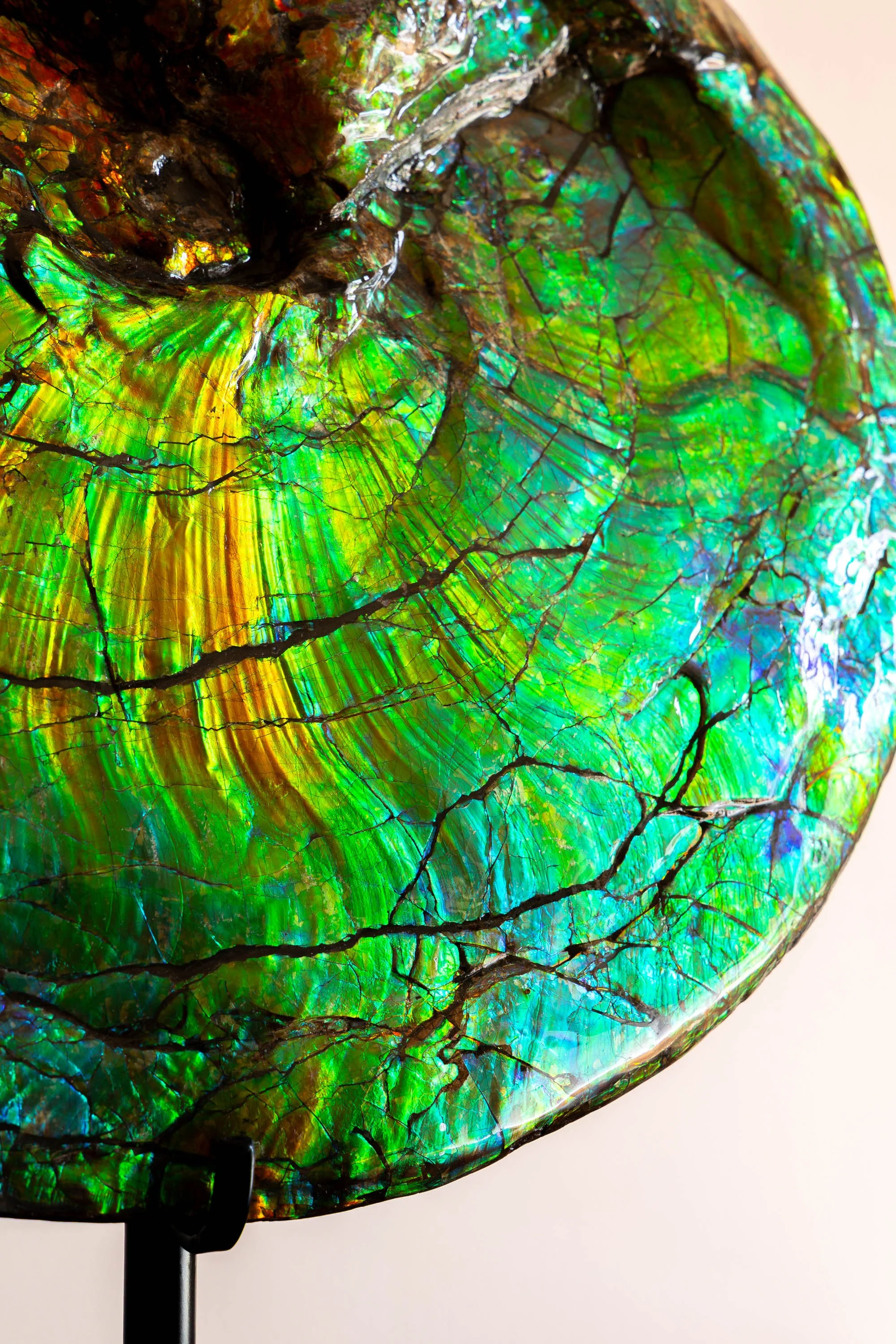
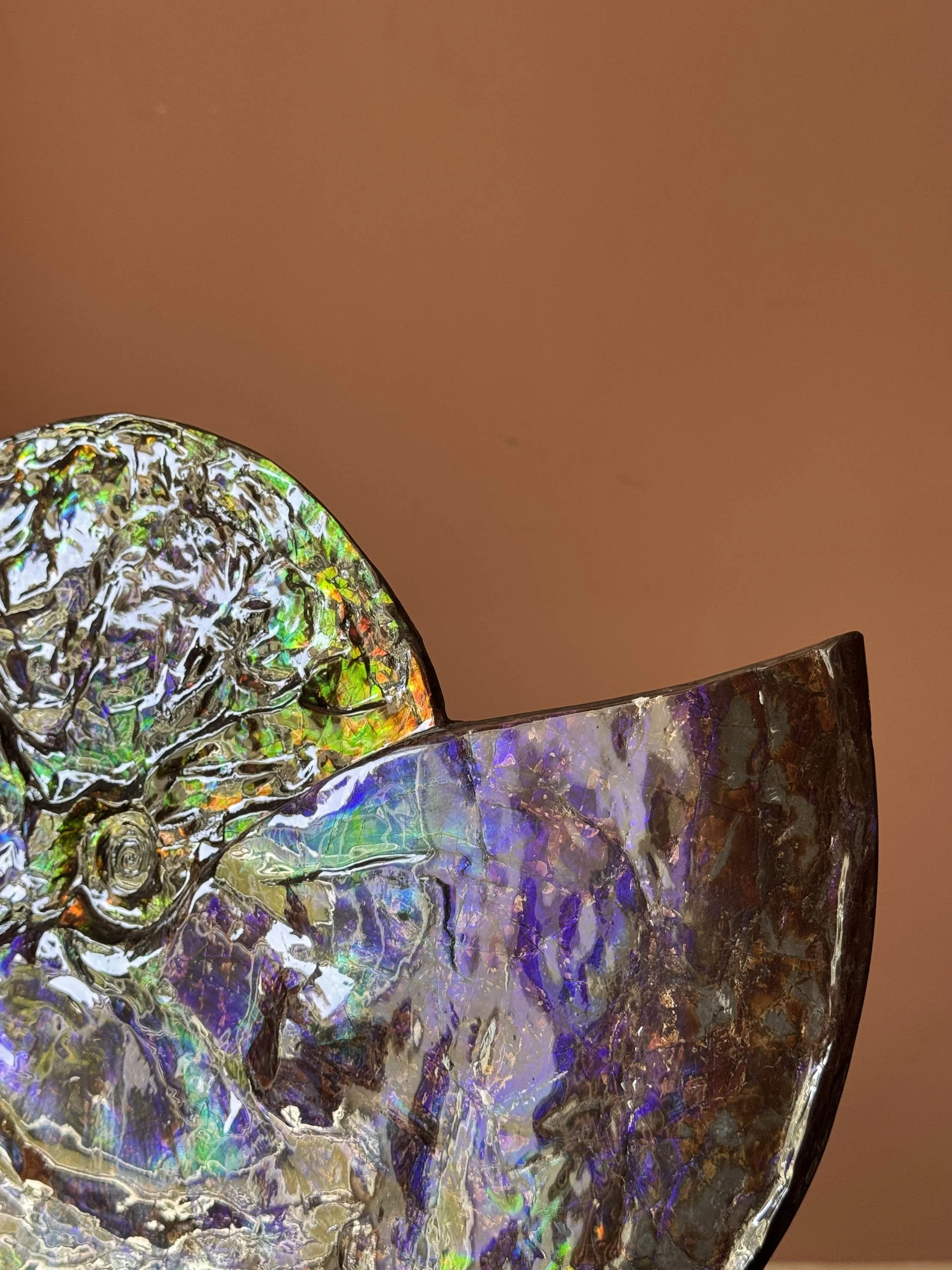
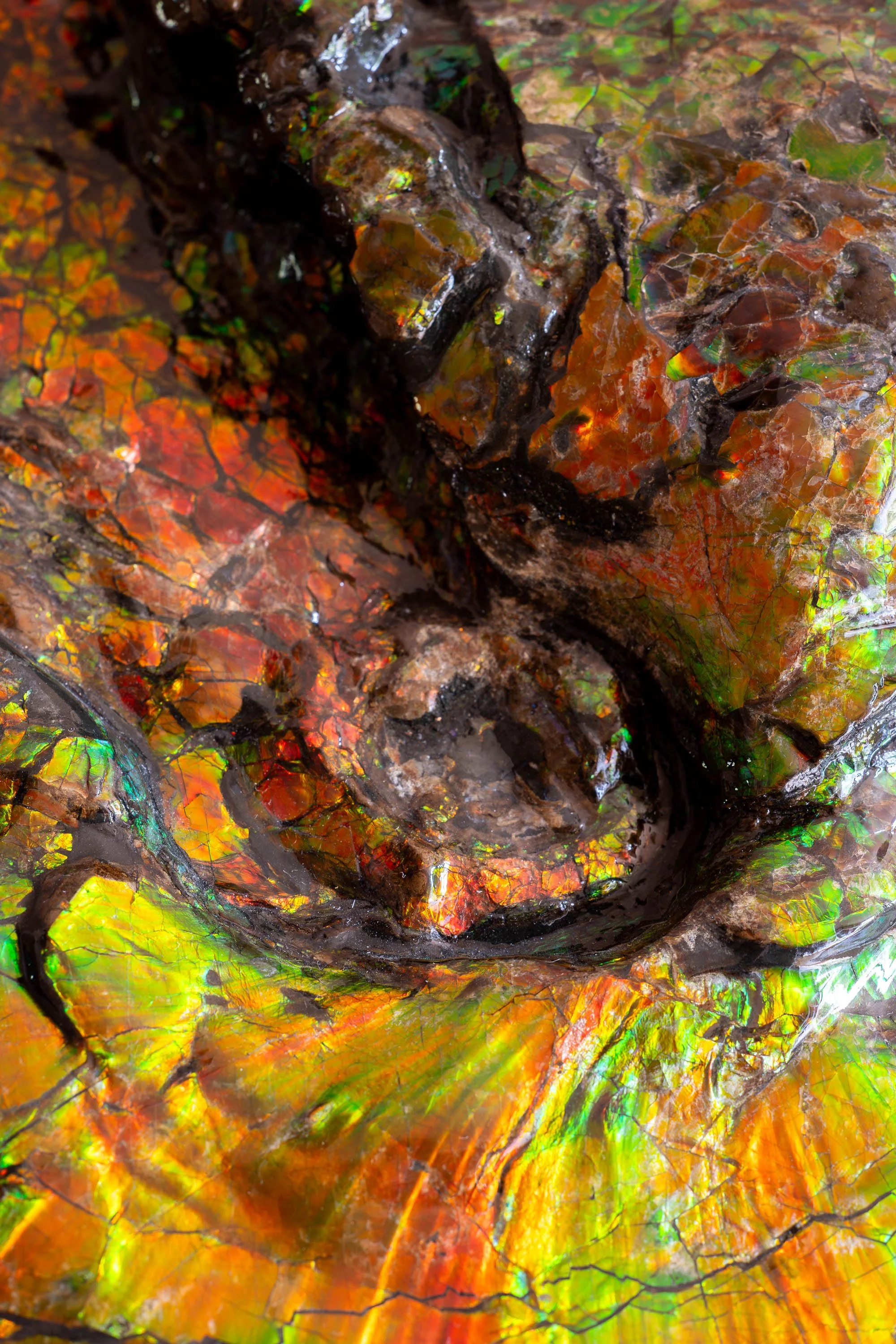
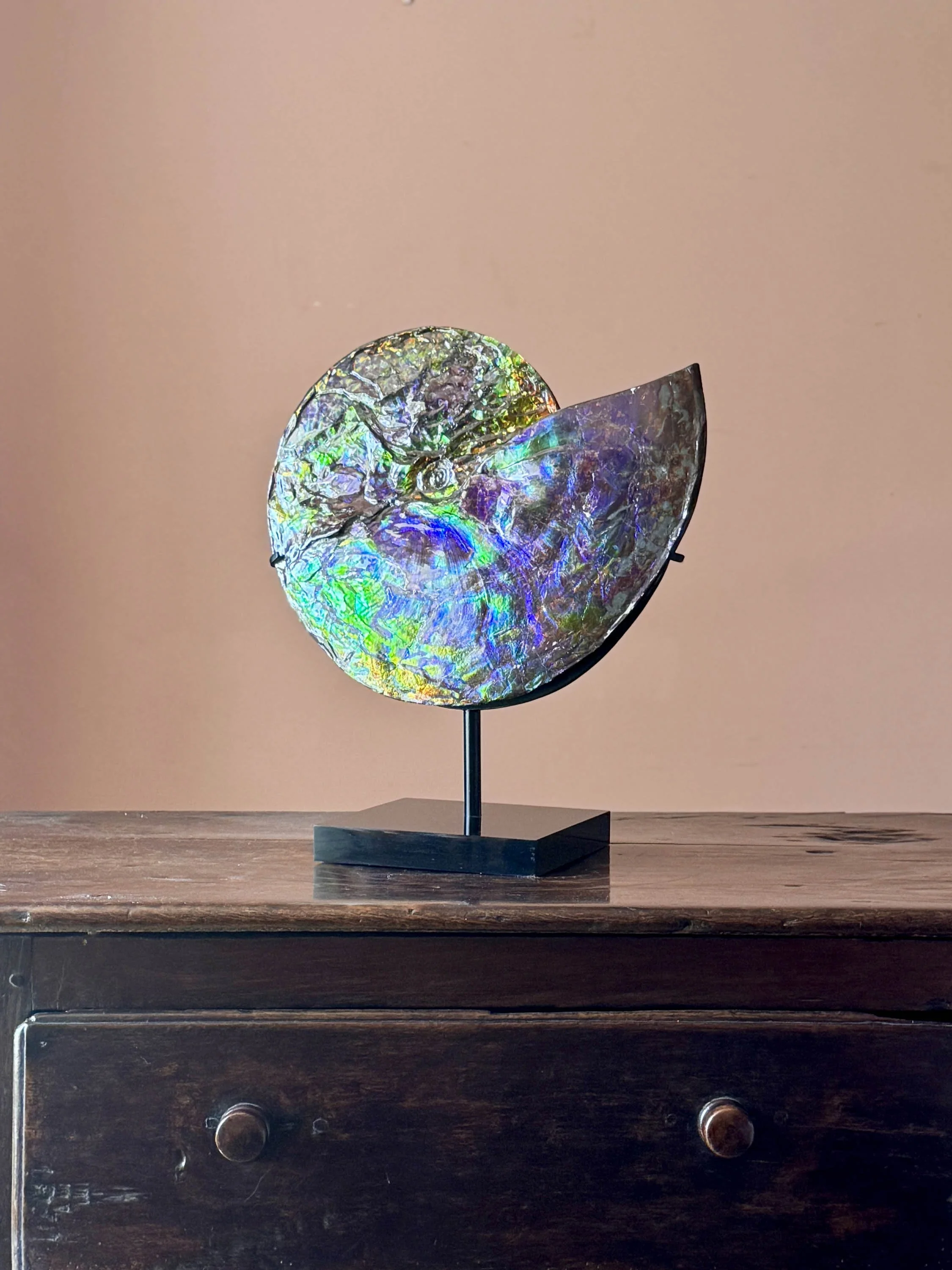
It’s the colour that feels impossible. Electric greens. Burnished reds. Gold. Violet. Occasionally, if you’re lucky, flashes of deep ultramarine blue – the rarest and most sought-after colour found in these extraordinary fossils.
The colours themselves come from ammolite, a rare iridescent material formed when the shell of an ammonite fossil survives fossilisation under remarkably specific geological conditions. While ammonites are relatively common fossils, gem-quality ammolite is exceptionally rare and found primarily along the eastern slopes of the Rocky Mountains in Canada.
Part fossil, part mineral, part sculpture, iridescent ammonites occupy a strange place somewhere between natural history and art.
Part fossil, part mineral, part sculpture

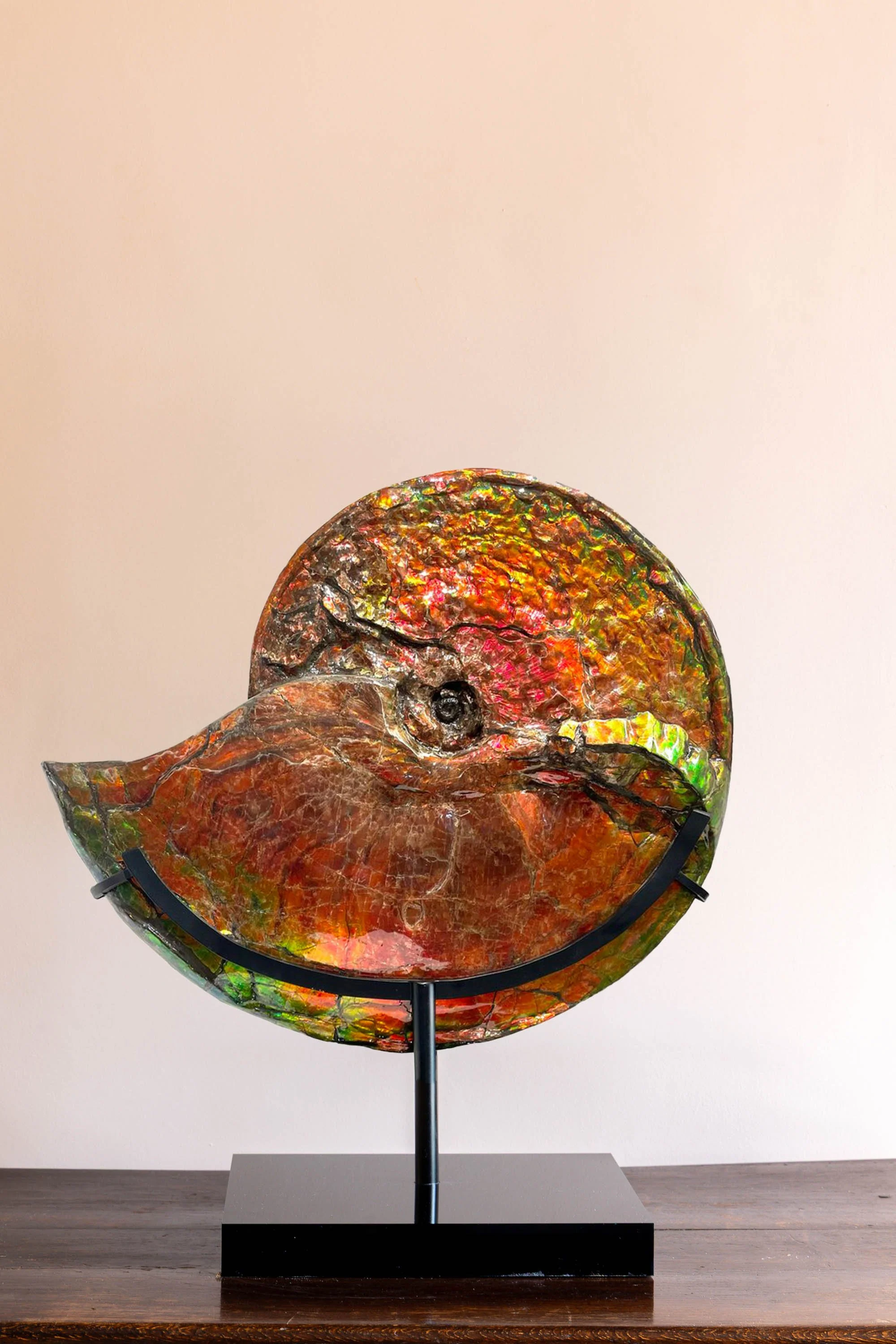
Ammonites were marine animals related to squid, octopus and nautilus, protected by coiled shells that in some species grew to more than two metres in diameter. Most ammonite fossils survive as stone impressions or compressed shells. Beautiful in their own way, but far less visually dramatic.
Ammolite forms only in rare circumstances where the original shell structure survives in remarkable detail. Microscopic layers of aragonite within the shell continue interacting with light millions of years later, scattering and refracting it into shifting spectrums of colour.
It’s part science, part illusion. As the angle of light changes, so too does the fossil itself. One moment green. Another copper. Then suddenly violet or blue.
This phenomenon is what gives iridescent ammonites their remarkable depth and movement – qualities that feel almost impossible in an object formed millions of years ago.
What Is Ammolite?
The formation of ammolite is the result of immense pressure, mineralisation and time. Over millions of years, the shells of ammonites were compressed beneath layers of sediment while minerals such as iron, copper and silica – often precipitated from volcanic ash – slowly transformed the fossilised shell. In exceptionally rare cases, the original aragonite structure remained intact, preserving the shell’s ability to reflect light.
The result is a gemstone unlike any other. Most commercially mined ammolite, often referred to as Canadian ammolite, is found within the Bearpaw Formation of Alberta, Canada. Even there, only a small percentage of fossils display the vivid iridescence collectors seek.
Ultramarine blue remains the rarest colour of all.
How Is Ammolite Formed?
Why Collectors Are Drawn To It
Natural history objects have always occupied an unusual place between science and art. Iridescent ammonites perhaps sit closest to the centre of that overlap.
Palaeontologists study them for the information they preserve about prehistoric oceans, species evolution and even the development of colour and optical properties in ancient animals. Collectors are often drawn to something less measurable: wonder, mostly.
There is a reason these fossils continue to appear in museum collections, design publications and major auctions. In 2020, Christie’s sold a large iridescent ammonite at their Sculpted By Nature sale for £325,000, far beyond its original estimate of £60,000-£90,000. Two years later, Sotheby’s achieved approximately £162,000 for another exceptional specimen.
As remarkable examples become increasingly difficult to source, interest in ammolite continues to grow among collectors, designers and natural history enthusiasts alike.
Not simply because ammolite is rare, but because these objects feel entirely singular. No two surfaces reflect light in exactly the same way.
EXOB occasionally acquires exceptional iridescent ammonites and natural history specimens, each selected for the quality of its preservation, colour and sculptural presence.
Despite their age, iridescent ammonites feel surprisingly contemporary within an interior – perhaps because they already resemble sculpture.
Placed on a dark plinth, displayed among books, or simply allowed to catch natural light on a shelf, they shift throughout the day in a way few objects do. The colours soften in low evening light and flare unexpectedly in the morning sun. Even smaller specimens seem to alter the atmosphere around them.
Unlike many decorative objects, ammonites don’t need styling tricks to create impact. Their presence comes from their history.
Every now and then, nature makes something that feels designed. Iridescent ammonites are one of those things.
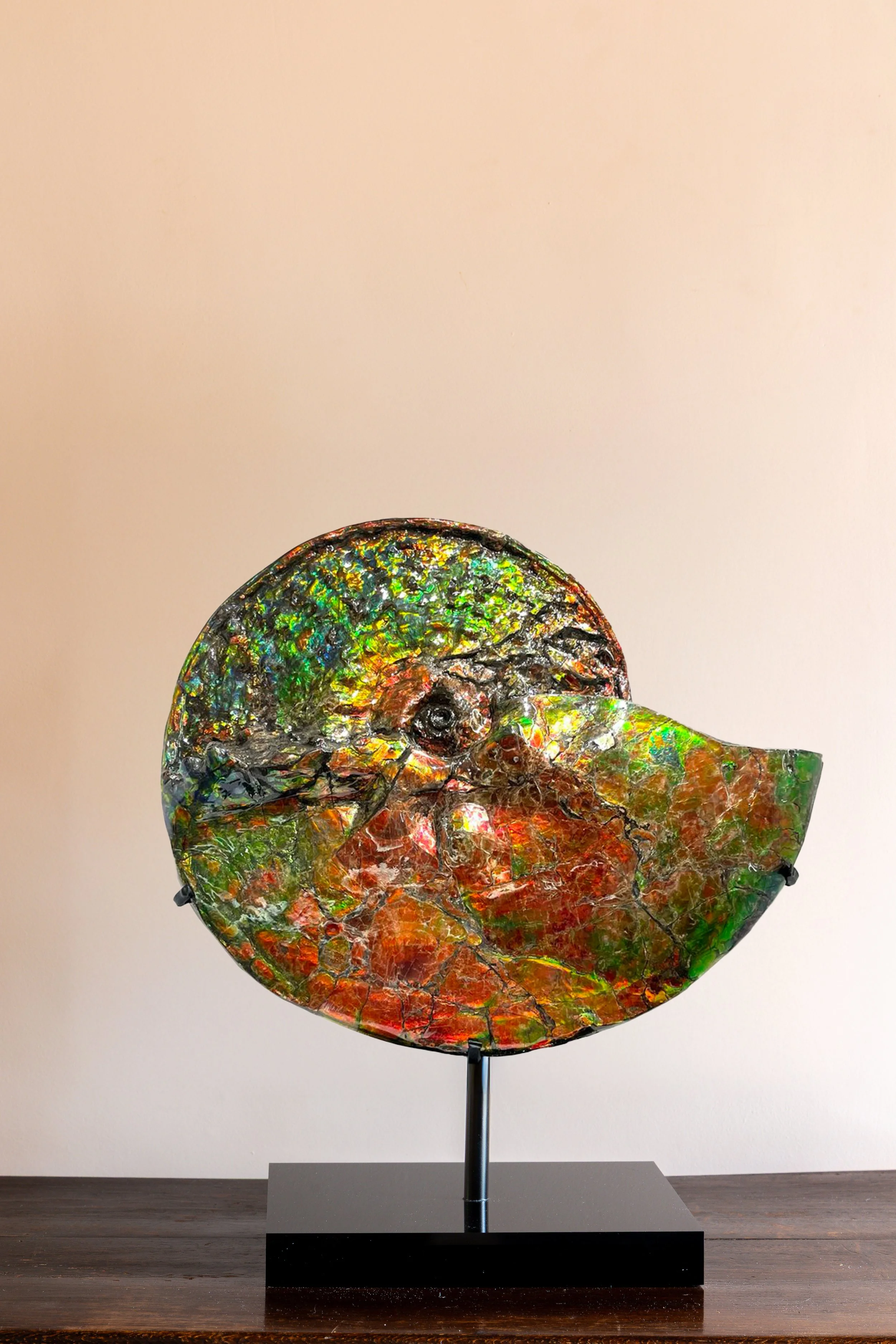
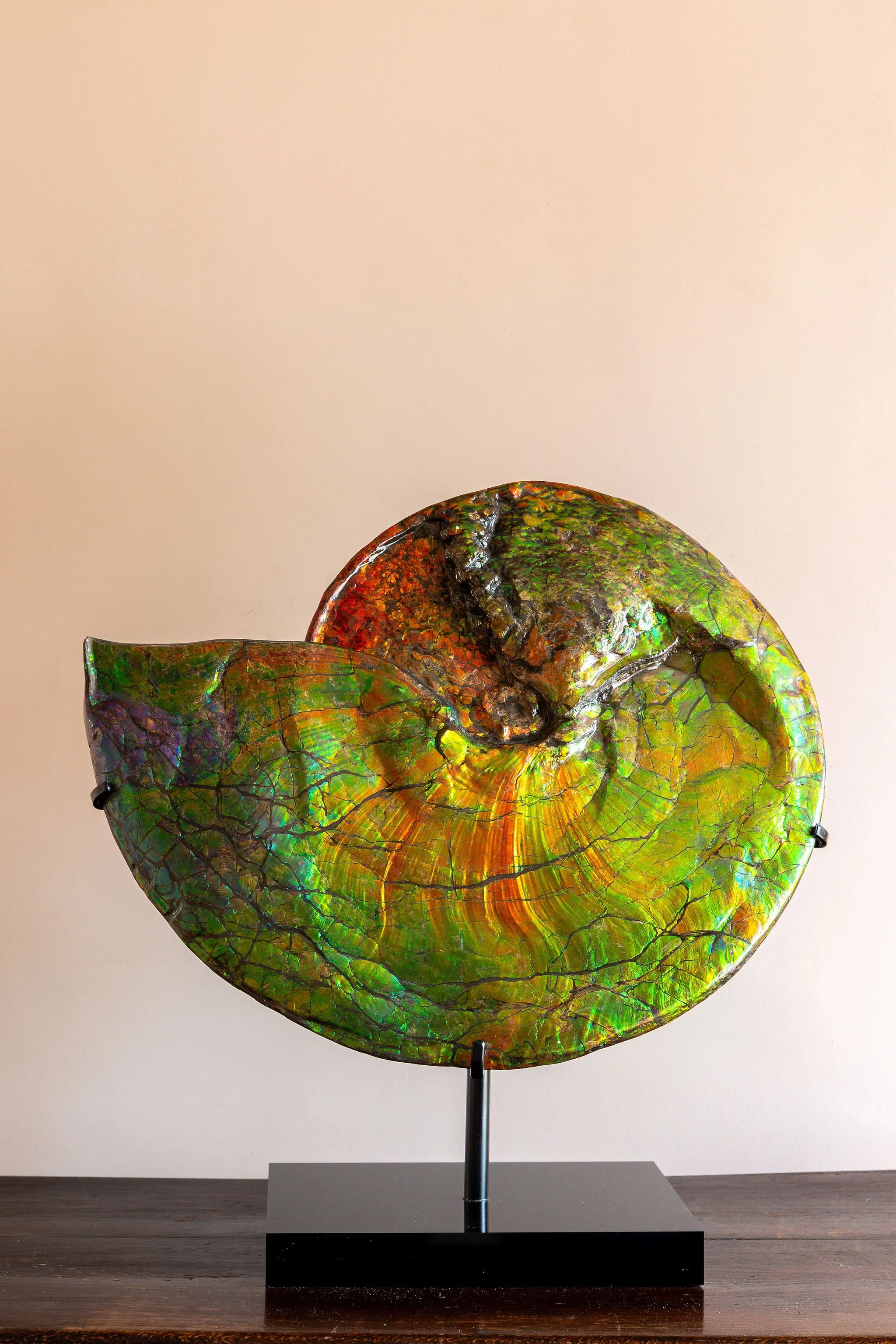
Placenticeras intercalare
Height 47 cm
Width 41 cm
Depth 20 cm
(with stand)
These stunning fossils belonged to marine animals who swam through prehistoric oceans between 240 and 65 million years ago. The unique spectrum of colours come from ‘ammolite’ - a rare iridescent material formed when the shell of an ammonite survives fossilisation under remarkably specific conditions.
Occasionally, flashes of deep ultramarine blue – the rarest and most sought-after colour found in the ammonite will appear, like this one. A truly rare and extraordinary piece of natural history.